Ko te Rerenga o te Matuku


The Flight of the Bittern
Learning With Indigenous Communities Through Archaeology, Philosophy, History, and Mātauranga Māori
In a rapidly changing world, many communities in Aotearoa are facing profound ecological, economic, and social challenges. But for Ngāti Manu, a hapū of Te Pēwhairangi (Bay of Islands), navigating severe disruption and pathways for adaptation is nothing new. Immense change has been reshaping their lives for generations: forests and gardens turned into European farms and pastures, traditional exchanges became market-driven trade, and local territorial rivalries gave way to existential struggles for sheer tribal survival.
Our team seeks to understand how Ngāti Manu sustained collective wellbeing and continuity amid such transformation.
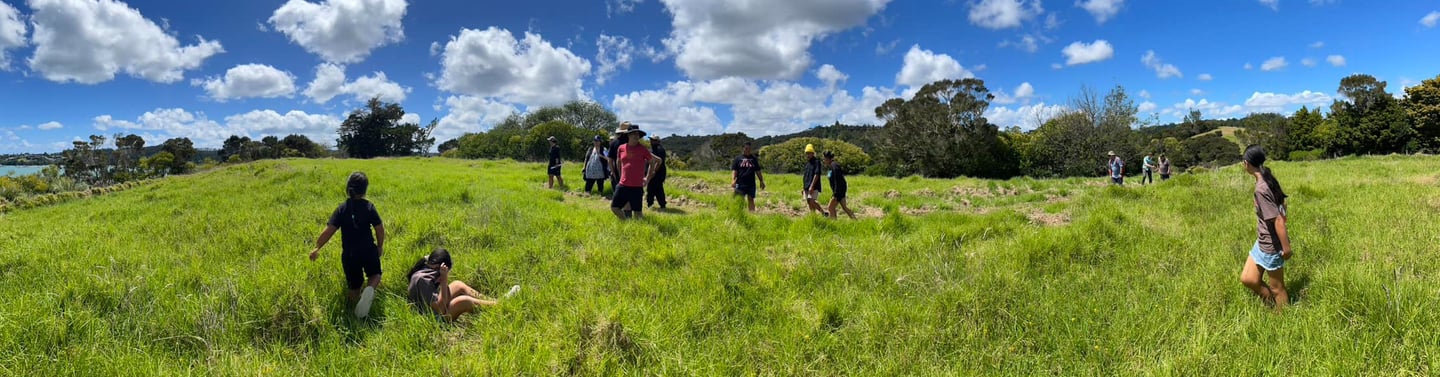
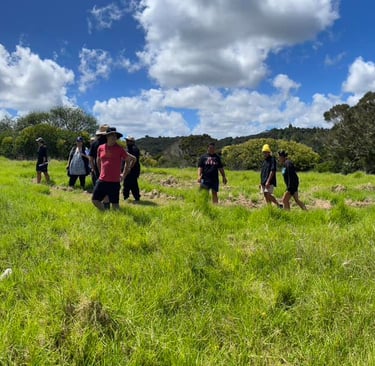
Drawing on an innovative mix of archaeology, philosophy, history, and the mātauranga of Ngāti Manu, we will trace the hapū’s journey from pre-European to post-contact eras across significant sites and landscapes. Partnering closely with Ngāti Manu, our academic and community researchers will map tribal relationships and responsibilities, explore social practices and institutions, as well as digitally reconstruct heritage landscapes and pivotal historical episodes.
By creating digitally immersive reconstructions of ancestral landscapes, our research will make the past accessible in engaging new ways, provide powerful resources for education and cultural revitalisation, as well as stimulate economic development and resilience through community-led tourism. Ultimately, this transdisciplinary and transcultural scholarship will deepen our understanding of Indigenous resilience and adaptive capacity, offering a blueprint for thriving futures in Aotearoa New Zealand and other global contexts where communities face intersecting disruptions.
This work is supported by a Marsden Fund Standard grant (2026-29), awarded and administered by the Royal Society of New Zealand Te Apārangi.
Learning With Indigenous Communities Through Archaeology, Philosophy, History, and Mātauranga Māori
In a rapidly changing world, many communities in Aotearoa are facing profound ecological, economic, and social challenges. But for Ngāti Manu, a hapū of Te Pēwhairangi (Bay of Islands), navigating severe disruption and pathways for adaptation is nothing new. Immense change has been reshaping their lives for generations: forests and gardens turned into European farms and pastures, traditional exchanges became market-driven trade, and local territorial rivalries gave way to existential struggles for sheer tribal survival.
Drawing on an innovative mix of archaeology, philosophy, history, and the mātauranga of Ngāti Manu, we will trace the hapū’s journey from pre-European to post-contact eras across significant sites and landscapes. Partnering closely with Ngāti Manu, our academic and community researchers will map tribal relationships and responsibilities, explore social practices and institutions, as well as digitally reconstruct heritage landscapes and pivotal historical episodes.
This work is supported by a Marsden Fund Standard grant (2026-29), awarded and administered by the Royal Society of New Zealand Te Apārangi.
Our team seeks to understand how Ngāti Manu sustained collective wellbeing and continuity amid such transformation.
By creating digitally immersive reconstructions of ancestral landscapes, our research will make the past accessible in engaging new ways, provide powerful resources for education and cultural revitalisation, as well as stimulate economic development and resilience through community-led tourism. Ultimately, this transdisciplinary and transcultural scholarship will deepen our understanding of Indigenous resilience and adaptive capacity, offering a blueprint for thriving futures in Aotearoa New Zealand and other global contexts where communities face intersecting disruptions.
Team Contacts
Thegn Ladefoged, Professor of Archaeology
Waipapa Taumata Rau | The University of Auckland
Krushil Watene, Peter Kraus Associate Professor of Philosophy
Waipapa Taumata Rau | The University of Auckland
Suz Te Tai, Marae Komiti Chair
Ngāti Manu
Team Bios
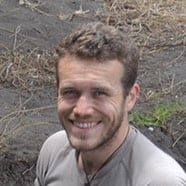
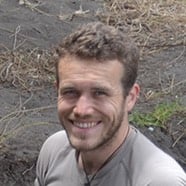
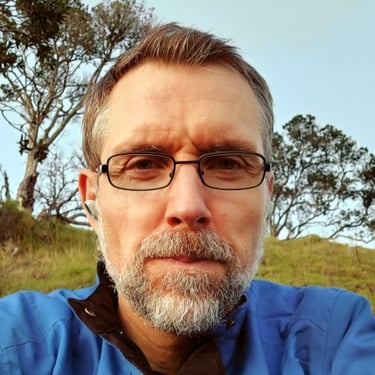
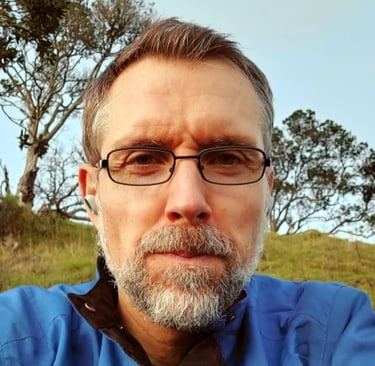
Thegn Ladefoged is a Professor of Archaeology in the School of Social Sciences at Waipapa Taumata Rau, University of Auckland. His research focuses on the archaeology of Polynesia and the wider Pacific, especially human–environment interactions and agricultural landscapes. He has led and collaborated on numerous field projects that integrate geospatial analysis, paleoenvironmental data, and Indigenous knowledge to reconstruct historical land use, demography, and political economies in Pacific island societies. Thegn's work is widely cited in Pacific archaeology and he supervises graduate students across topics in landscape archaeology, settlement patterns, and the long-term dynamics of social-ecological systems.
Krushil Watene is Peter Kraus Associate Professor of Philosophy at Waipapa Taumata Rau, University of Auckland, and a moral and political philosopher of Ngāti Manu, Te Hikutu, Ngāti Whātua Ōrākei, and Tongan descent. Her research focuses on well-being, development, justice, Indigenous philosophies, and intergenerational ethics, and has been supported by major grants including a Rutherford Discovery Fellowship. Krushil serves on national and international advisory bodies, including the United Nations Human Development Report Advisory Board, and is widely recognised as a leading voice in Indigenous and environmental philosophy.
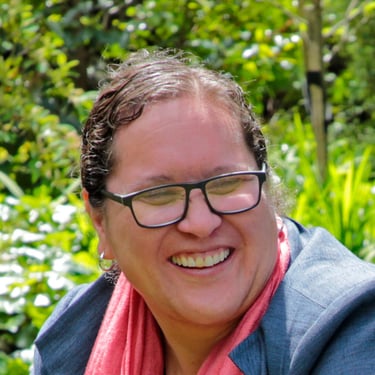
Suz Te Tai (Ngāti Manu) is the long-standing chair of the Kāretu Māori Committee and a key leader within the Ngāti Manu marae and wider hapū. She is a marae-based research practitioner, artist, and fisherwoman, and co-founded Ngā Kaitiaki o te Ahi, a marae-based educational programme that strengthens intergenerational relationships with ancestral lands and waters. Her work focuses on revitalising Ngāti Manu kaitiakitanga and supporting the return of whenua through community-led relationships, advocacy, and cultural practice.
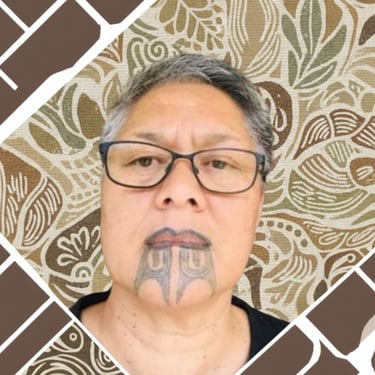
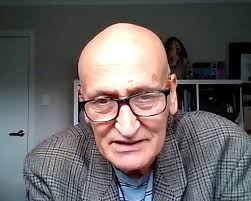
Arapeta Hamilton is a prominent kaumātua of Ngāti Manu, known for his deep connection to the iwi's history and land. He has been actively involved in negotiations and efforts to reclaim and protect Ngāti Manu ancestral lands, embodying a strong spiritual and cultural commitment to his hapū. Arapeta's leadership and dedication symbolise hope for the preservation and revitalisation of Ngāti Manu heritage and whenua
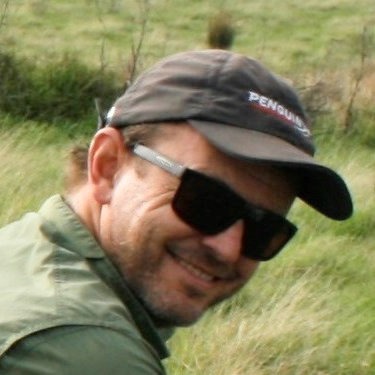
Zac McIvor is a Senior Lecturer in Archaeology at the University of Otago (Ōtākou Whakaihu Waka). Working at the interface of archaeological science and mātauranga ā-hapū, his research focuses on community-based practice to facilitate kaitiakitanga and holistic heritage connections. Zac uses landscape archaeology, wānanga and digital reconstruction techniques to empower communities responding to climate change, enhance connection to place via VR, and integrate whakapapa with radiocarbon chronologies.
Marco Grix is a Research Fellow in Philosophy at Waipapa Taumata Rau, University of Auckland, specialising in moral, political, and social philosophy with a focus on environmental ethics and climate justice. He holds degrees from the University of Auckland, the University of Otago, and the University of Oxford, alongside an earlier background in management and business. Born and raised in former East Germany, Marco now combines academic research, governance roles in the environmental sector, and community engagement to support just and sustainable futures in Aotearoa New Zealand.
Mark McCoy is an anthropological archaeologist and professor of anthropology at Florida State University, where he also serves as chair of the Department of Anthropology. His research specialises in the use of geospatial technologies such as GIS and laser scanning to study the development of ancient societies on Pacific Islands, including Hawai‘i, New Zealand, and Rapa Nui. Mark has held faculty positions at several universities before joining FSU, with a PhD from the University of California, Berkeley.
Jesse Casana is an archaeologist and professor in the Department of Anthropology at Dartmouth College. His research focuses on settlement and land use history, the emergence and development of complex societies, and human-environment interactions, with field projects in the Middle East and collaborations worldwide. Jesse is known for advancing archaeological remote sensing techniques, including the use of satellite imagery, drones, and geophysics, and directs several significant research projects on archaeological landscapes.
Alex Jorgensen is a Senior Specialist on Māori Heritage at Auckland Council, where he focuses on advancing Māori heritage initiatives and post-doctoral research. With experience in both academic and community settings, Alex contributes to heritage management and Indigenous knowledge advocacy. His expertise supports innovative and culturally informed projects within the region.
Partners & Friends
Ngāti Manu
Faculty of Arts and Education, University of Auckland
Royal Society of New Zealand Te Apārangi
Prof Kyle Whyte, University of Michigan
Prof Aimee Craft, University of Ottawa
News
Royal Society of New Zealand Te Apārangi
Press release: Learning with Indigenous communities through archaeology, philosophy, history, and mātauranga Māori
Ngāti Manu
Press release: Ngāti Manu Continues on a Journey of Rediscovery Through Major Marsden Fund Research
Waipapa Taumata Rau | The University of Auckland
Press release: Thriving amid colonisation: focus on Northland hapū
Daily Nous
Announcement: Large Grant for Philosopher & Archaeologist on Indigenous Community Flourishing
Updates
To receive updates about our work, please check back here at our website frequently or sign up for electronic news:
Updates
To receive updates about our work, please check back here at our website frequently or sign up for electronic news:
[ www.rerengamatuku.nz ]